介绍常用的 Advice
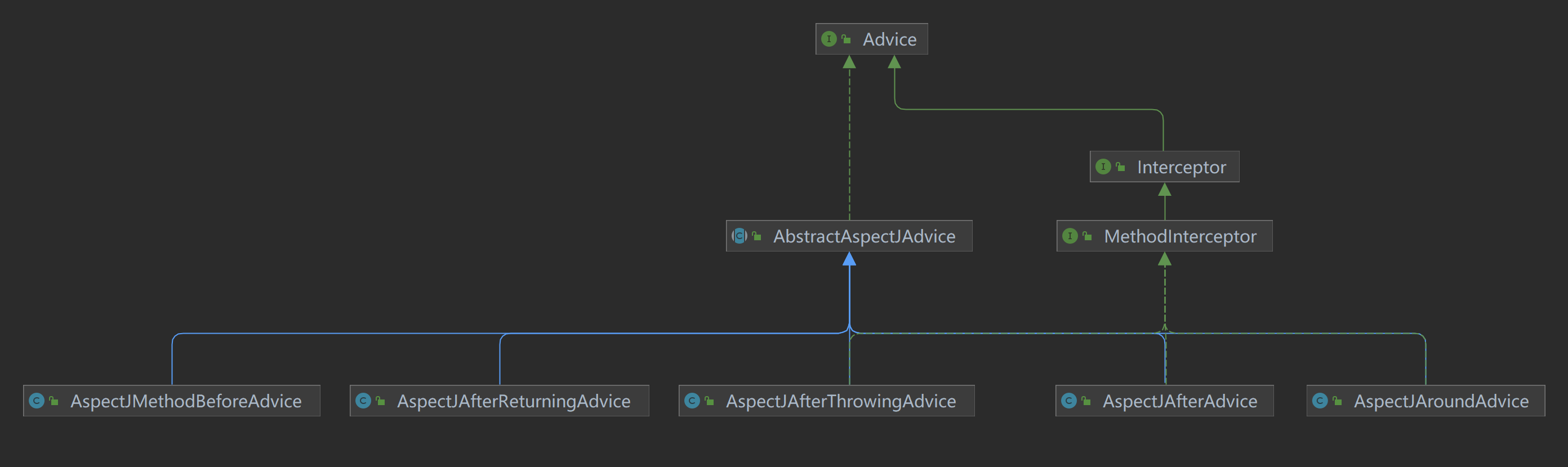
AspectJMethodBeforeAdvice, AspectJAfterReturningAdvice 没有实现 MethodInterceptor 接口, 在构造调用链时会通过 MethodBeforeAdviceAdapter, AfterReturningAdviceAdapter 这两个适配器转换成对应的接口,通过调用 MethodInterceptor#invoke 方法来实现对各个方法的处理
AspectJMethodBeforeAdvice
定位: org.springframework.aop.framework.adapter.MethodBeforeAdviceInterceptor#invoke
1
2
3
4
5
6
7
8
|
@Override
public Object invoke(MethodInvocation mi) throws Throwable {
this.advice.before(mi.getMethod(), mi.getArguments(), mi.getThis());
return mi.proceed();
}
|
定位: org.springframework.aop.aspectj.AspectJMethodBeforeAdvice#before
1
2
3
4
| public void before(Method method, Object[] args, @Nullable Object target) throws Throwable {
invokeAdviceMethod(getJoinPointMatch(), null, null);
}
|
AspectJAfterReturningAdvice
定位: org.springframework.aop.framework.adapter.AfterReturningAdviceInterceptor
1
2
3
4
5
6
7
| public Object invoke(MethodInvocation mi) throws Throwable {
Object retVal = mi.proceed();
this.advice.afterReturning(retVal, mi.getMethod(), mi.getArguments(), mi.getThis());
return retVal;
}
|
定位: org.springframework.aop.aspectj.AspectJAfterReturningAdvice#afterReturning
1
2
3
4
5
| public void afterReturning(@Nullable Object returnValue, Method method, Object[] args, @Nullable Object target) throws Throwable {
if (shouldInvokeOnReturnValueOf(method, returnValue)) {
invokeAdviceMethod(getJoinPointMatch(), returnValue, null);
}
}
|
AspectJAfterThrowingAdvice
1
2
3
4
5
6
7
8
9
10
11
12
13
14
| public Object invoke(MethodInvocation mi) throws Throwable {
try {
return mi.proceed();
}
catch (Throwable ex) {
if (shouldInvokeOnThrowing(ex)) {
invokeAdviceMethod(getJoinPointMatch(), null, ex);
}
throw ex;
}
}
|
AspectJAfterAdvice
1
2
3
4
5
6
7
8
9
10
11
| @Override
public Object invoke(MethodInvocation mi) throws Throwable {
try {
return mi.proceed();
}
finally {
invokeAdviceMethod(getJoinPointMatch(), null, null);
}
}
|
AspectJAroundAdvice
1
2
3
4
5
6
7
8
9
10
| @Override
public Object invoke(MethodInvocation mi) throws Throwable {
if (!(mi instanceof ProxyMethodInvocation)) {
throw new IllegalStateException("MethodInvocation is not a Spring ProxyMethodInvocation: " + mi);
}
ProxyMethodInvocation pmi = (ProxyMethodInvocation) mi;
ProceedingJoinPoint pjp = lazyGetProceedingJoinPoint(pmi);
JoinPointMatch jpm = getJoinPointMatch(pmi);
return invokeAdviceMethod(pjp, jpm, null, null);
}
|
AbstractAspectJAdvice
invokeAdviceMethod
定位: org.springframework.aop.aspectj.AbstractAspectJAdvice#invokeAdviceMethod
调用 advice 方法
1
2
3
4
5
6
7
8
9
10
11
12
13
14
15
16
17
18
19
20
21
22
23
24
25
26
27
| protected Object invokeAdviceMethod(JoinPoint jp, @Nullable JoinPointMatch jpMatch,
@Nullable Object returnValue, @Nullable Throwable t) throws Throwable {
return invokeAdviceMethodWithGivenArgs(argBinding(jp, jpMatch, returnValue, t));
}
protected Object invokeAdviceMethodWithGivenArgs(Object[] args) throws Throwable {
Object[] actualArgs = args;
if (this.aspectJAdviceMethod.getParameterCount() == 0) {
actualArgs = null;
}
try {
ReflectionUtils.makeAccessible(this.aspectJAdviceMethod);
return this.aspectJAdviceMethod.invoke(this.aspectInstanceFactory.getAspectInstance(), actualArgs);
}
catch (IllegalArgumentException ex) {
throw new AopInvocationException("Mismatch on arguments to advice method [" +
this.aspectJAdviceMethod + "]; pointcut expression [" +
this.pointcut.getPointcutExpression() + "]", ex);
}
catch (InvocationTargetException ex) {
throw ex.getTargetException();
}
}
|
getJoinPointMatch
定位: org.springframework.aop.aspectj.AbstractAspectJAdvice#getJoinPointMatch
1
2
3
4
5
6
7
8
9
10
11
12
13
14
15
16
17
| protected JoinPointMatch getJoinPointMatch() {
MethodInvocation mi = ExposeInvocationInterceptor.currentInvocation();
if (!(mi instanceof ProxyMethodInvocation)) {
throw new IllegalStateException("MethodInvocation is not a Spring ProxyMethodInvocation: " + mi);
}
return getJoinPointMatch((ProxyMethodInvocation) mi);
}
protected JoinPointMatch getJoinPointMatch(ProxyMethodInvocation pmi) {
String expression = this.pointcut.getExpression();
return (expression != null ? (JoinPointMatch) pmi.getUserAttribute(expression) : null);
}
|